Navigating the Empowering Consumers for the Green Transition Directive (ECGT) as a B Corp or Consumer Brand.

A three-layer system of accountability
How ECGT is about to reshape sustainability narratives
For years, sustainability has largely been connected to brand narratives and shaped by good intentions and future commitments, resulting in claims and labels with varying levels of credibility. The EU’s ECGT-Directive marks a clear shift away from this model.
From September 2026 onward, sustainability communication will be governed by stricter rules on substantiation and verification. ECGT does not challenge sustainability ambition; it changes how sustainability can be communicated so consumers can better understand and rely on what they are told when making purchase decisions.
When good intentions fall short
ECGT reframes sustainability communication as a matter of consumer protection rather than brand expression. It aims to ensure that consumers can rely on sustainability-related information when making purchasing decisions, and that competition is based on verifiable performance rather than persuasive messaging.
The directive targets environmental claims and sustainability labels that overstate real-world impacts or lack credible substantiation.
In practice:
Environmental claims and sustainability labels must be backed by credible substantiation and, where applicable, independent verification.
One directive, universal scope
Unlike some EU regulations, ECGT applies to all companies selling products or services to consumers in the EU, regardless of size. SMEs are not exempt. It covers physical retail and online sales alike, including companies based outside the EU that market to EU consumers.
In practice:
If you sell within the EU market, ECGT applies, no matter how large or small your organisation is.
A fixed timeline, no grace period
EU member states must transpose ECGT into national law by March 2026. From September 2026 onward, compliance becomes mandatory. While national authorities may add practical enforcement details or penalties, the underlying obligations will apply immediately once national laws take effect.
In practice:
From September 2026, non-compliant claims and labels are exposed to enforcement risk.
Enforcement is local
In Belgium, ECGT is enforced by the FPS Economy, which can act independently or following complaints from consumers, NGOs, or competitors. The Jury d'Éthique Publicitaire adds reputational pressure through non-binding rulings on green claims.
In practice:
Sustainability claims can be challenged from multiple angles, even without a formal audit.
A three-layer system of accountability
ECGT operates across three interconnected layers. First, the language layer, which includes claims, labels, logos, packaging copy, and website statements. Second, the verification layer, where evidence, standards, and audits sit. Third, the enforcement layer, where authorities assess compliance and act on complaints. While ECGT regulates what consumers see, liability is determined by what sits behind the message.
In practice:
Risk emerges where public-facing language moves faster than verification mechanisms.
The myth of good intentions
ECGT challenges the assumption that sustainability-oriented organisations are inherently trustworthy because their intentions are positive. The directive is built on consumer perception, not internal organisational motivation. What matters is not how a claim is meant, but how it is reasonably understood.
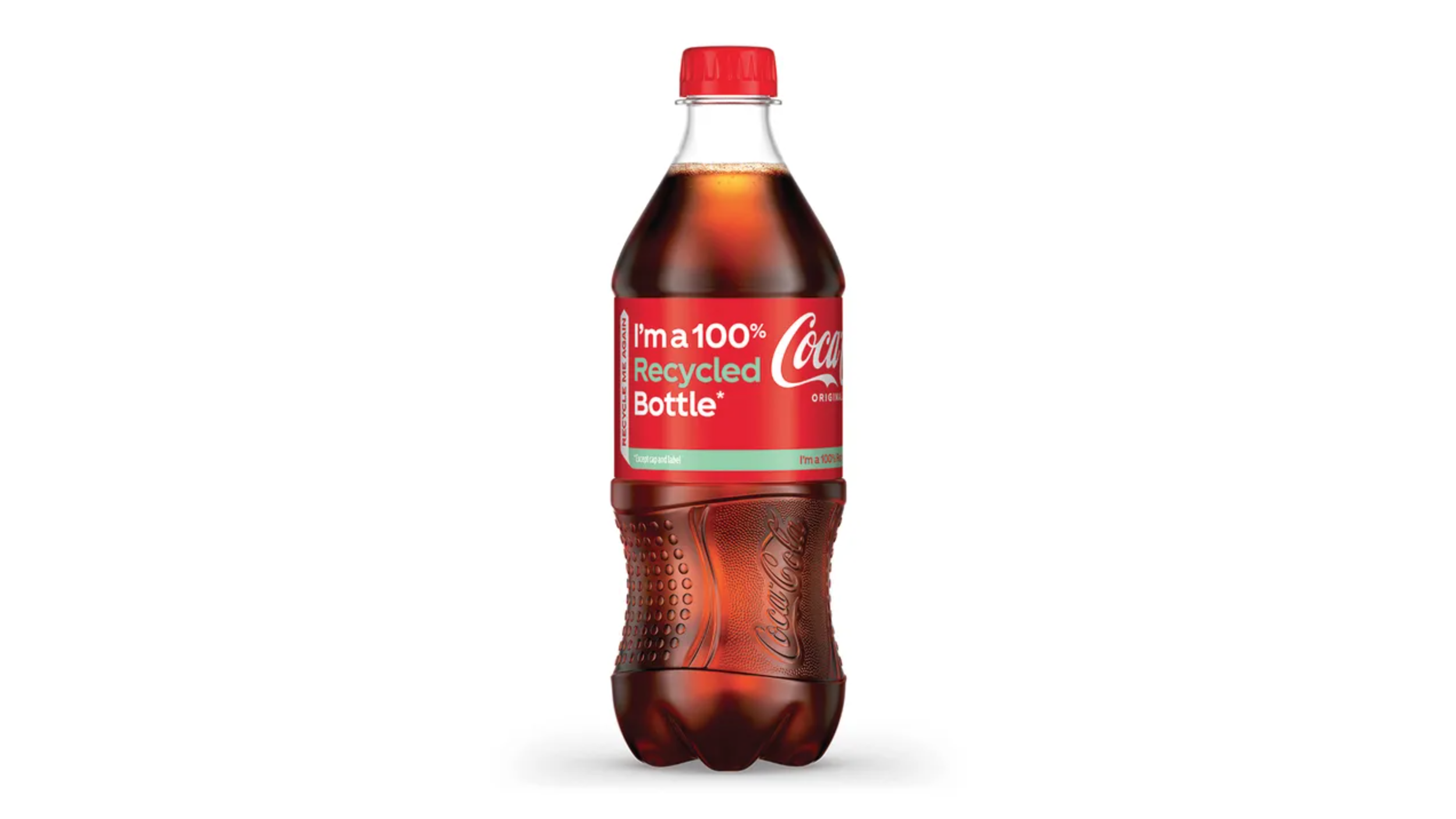
A clear illustration emerged in 2025, when Coca-Cola agreed to revise and remove misleading “I’m a 100% recycled bottle” recycling claims on its bottles across the EU following a greenwashing complaint lodged by BEUC and supported by consumer groups (clientearth).
In practice:
If a claim leads consumers to expect more than the product actually delivers, it becomes vulnerable, regardless of intent.
Labels as regulated signals, not value badges
Under ECGT, sustainability labels are treated as factual claims, not expressions of intent. They require a defined standard, consistent application, and independent verification, making self-certification insufficient and driving certification schemes toward third-party audits. For B Lab and its B Corps, this means moving towards an ISO 17021-1 accredited provider (B Lab).
In practice:
Sustainability labels without a proper independent third-party certification scheme are prohibited.
How this relates to B Lab
This regulatory logic has directly shaped the evolution of B Lab standards by increasing transparency around the meaning of certification and the way B Corps are verified. This goes beyond changes to the verification model and reflects a broader shift from declarations of intent toward systems that demonstrate measurable impact over time. As part of this, B Corp’s must also update the B Corp logo by adding a URL that allows consumers to access clear explanatory information.
In practice:
The B Corp standard complies with the ECGT as the label is verified by an independent external verifier, while shifting the focus from commitments to building and evidencing impact over time
What compliance work looks like if you are a B Corp
For B Corps, the first step is to self-identify ECGT relevance via the B Impact Assessment platform. The preferred path is recertification under B Corp V2.1 before September 2026. If this is not feasible, impacted companies may adopt the new logo and claims guidelines, sign an agreement and commit to recertification at their next cycle, while temporarily remaining on V1.6.
However, this agreement includes a liability waiver acting as a legal shield for B Lab, not a compliance shield for the brand. Since V1.6 lacks the independent third-party verification required by the ECGT, relying on this agreement is a stop-gap that shifts the regulatory risk to companies. Where recertification cannot be achieved in time, removing the B Corp logo from packaging and other consumer-facing materials may be the safer option.
Beyond certification status, any organisation selling to EU consumers and using sustainability in its B2C communication should review its claims, certifications, and communication channels to identify potential non-compliance risks.
In practice:
B Corps must make an explicit choice: recertify, formally commit to recertification (accepting the liability risk), or remove the logo, while systematically reviewing claims and communications for ECGT risk.
The cost of getting it wrong
Non-compliance carries layered risk. Reputationally, companies may lose trust or the ability to reference certifications. Commercially, they may lose differentiation, pricing power, or retail access. Legally, enforcement may result in penalties or corrective measures depending on national implementation.
In practice:
ECGT risk is cumulative: reputational, commercial, and legal impacts reinforce each other.
ECGT is not about sustainability becoming stricter. It is about regulating sustainability narratives. For consumer brands, the shift is clear: sustainability communication must now be treated with the same rigour as any regulated commercial claim.
If you are navigating ECGT and want clarity on where your public-facing sustainability narrative may carry risk, we offer an ECGT Communications Review, a structured scan of claims, labels, and materials to flag potential non-compliance ahead of enforcement.